Expert Steam Heating Balancing and Radiator Restoration
Throughout Ditmars, Steinway, and Astoria Heights, heavy cast-iron radiators remain the primary means of winter comfort. While these durable fixtures can provide gentle, radiant warmth for more than a century, their performance depends entirely on delicate steam balancing. When property owners require radiator repair Ditmars-Steinway Queens, the issues rarely stem from the solid iron casting itself. Instead, problems usually emerge from failed control accessories: worn shutoff valve stems, clogged air vents, corroded pipe nipples, and altered building floor pitches.
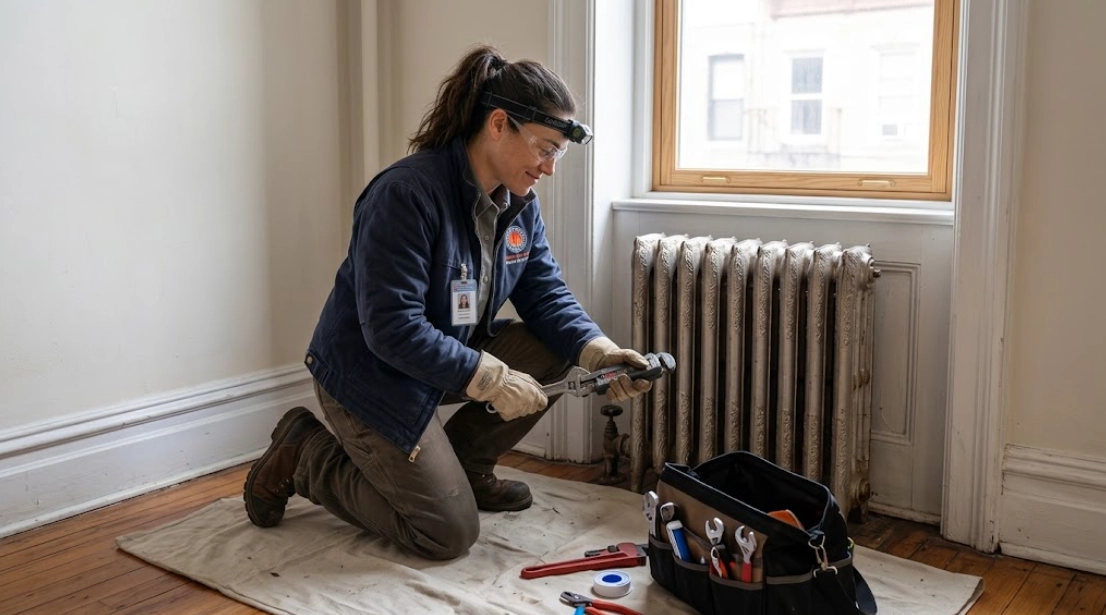
Diagnosing Common Radiator Problems in Queens Apartments
Residential steam heating operates on simple physics, but minor component failures create disproportionate chaos across multiple floors:
1. Cold or Only Partially Warm Radiators
Before steam can enter a radiator, atmospheric air must be pushed out. When the small brass vent screwed into the side of the radiator fails in a closed position or becomes clogged with mineral scale, trapped air acts like a solid plug, preventing steam from entering. Replacing the vent with an appropriately calibrated orifice restores flow.
2. Violent Clanging, Pounding, and Water Hammer
Loud banging sounds are not an unavoidable quirk of historic New York apartments—they indicate a physical hydraulic collision. In single-pipe steam systems, steam travels forward through the same pipe that condensed liquid water returns through. If a radiator has settled backwards over decades so water pools at the far end, or if horizontal pipe runouts lack proper fall, incoming steam slams into trapped water pockets at high speed, creating jarring metallic shocks. Leveling radiators with wooden or composite shims eliminates this trapped pool.
3. Continuous Hissing and Water Spitting
Radiator air vents contain a bi-metallic disc or an alcohol-filled float capsule designed to close tightly the instant hot steam touches it. If the internal mechanism deteriorates, the vent will hiss continuously, fill the room with humid steam vapor, damage hardwood floors, peel plaster paint, and deplete the central boiler repair in Ditmars-Steinway system of water.
4. Leaks Around Valve Stems and Packing Nuts
The large angle valve at the base of your radiator relies on compressed graphite or PTFE packing around the brass stem. Over years of thermal cycling, this packing dries out, leading to weeping brown water every time steam pressure builds. Repacking the valve gland nut or replacing the entire valve assembly stops leaks before ceiling damage occurs below.
Dealing With Cold or Clanking Radiators?
Our heating technicians troubleshoot steam valves, air vents, and water hammer throughout Ditmars-Steinway.
Single-Pipe Steam vs. Two-Pipe Vapor Radiator Systems
Different architectural eras in Queens utilized distinct radiator designs:
- Single-Pipe Steam Systems: Characterized by a single pipe entering one bottom corner of the radiator and an air vent on the opposite side. Crucially, the supply valve must remain fully open or fully closed. Throttling the valve halfway traps condensate and causes catastrophic water hammer.
- Two-Pipe Steam & Vapor Systems: Often found in larger pre-war apartment buildings near Astoria Park and Ditmars Boulevard. These feature a steam supply valve on one side and a thermostatic radiator trap on the opposite return side. When the thermostatic bellows inside the trap fails, live steam blows directly into dry return lines, wasting fuel and starving upper floors.
Safety Precautions Around Live Steam Systems
Steam radiators operate at surface temperatures reaching 212°F or higher. Escaping live steam carries significant thermal energy capable of severe scald injuries. Never attempt to unscrew an air vent, loosen a valve union, or adjust internal components while the central heating system is actively pressurized. If a radiator valve breaks off or sprays uncontrollable boiling water, turn off the emergency burner switch in the cellar and call for immediate assistance.
Balancing Multi-Floor Heat Distribution
If first-floor apartments are uncomfortably hot while top-floor tenants shiver, the building's radiator venting is out of balance. By installing rapid-venting main line air vents in the basement header and proportional radiator vents throughout individual rooms, steam reaches distant radiators simultaneously without overheating lower living units. Where boiler upgrades are needed to support system performance, review our boiler replacement in Ditmars-Steinway guidance.
Frequently Asked Questions About Radiator Repair
Dripping water usually means the radiator is pitching away from the supply valve, causing water to pool inside until it overflows through the vent orifice. Alternatively, the internal float inside the vent has filled with water or scale and can no longer seal against incoming liquid.
Cast-iron radiators are assembled with internal tapered push nipples drawn tight with tie rods. While minor leaks around pipe fittings can be resealed, severe rust between cast sections often requires disassembling the radiator to replace the push nipples, or sourcing a matched architectural salvage replacement radiator.
The radiator spud is a specialized brass union nipple threaded directly into the cast-iron radiator tapping. When replacing a damaged radiator valve, the mating brass faces must align perfectly. If the old spud is corroded or scored, it must be carefully extracted using a specialized internal radiator spud wrench without cracking the cast iron.
Restore Even, Quiet Heating to Your Property
Call NY Plumbing to schedule professional steam heating balancing and radiator valve repairs in Queens.