Clearing Persistent Blockages in Classic Queens Drainage Systems
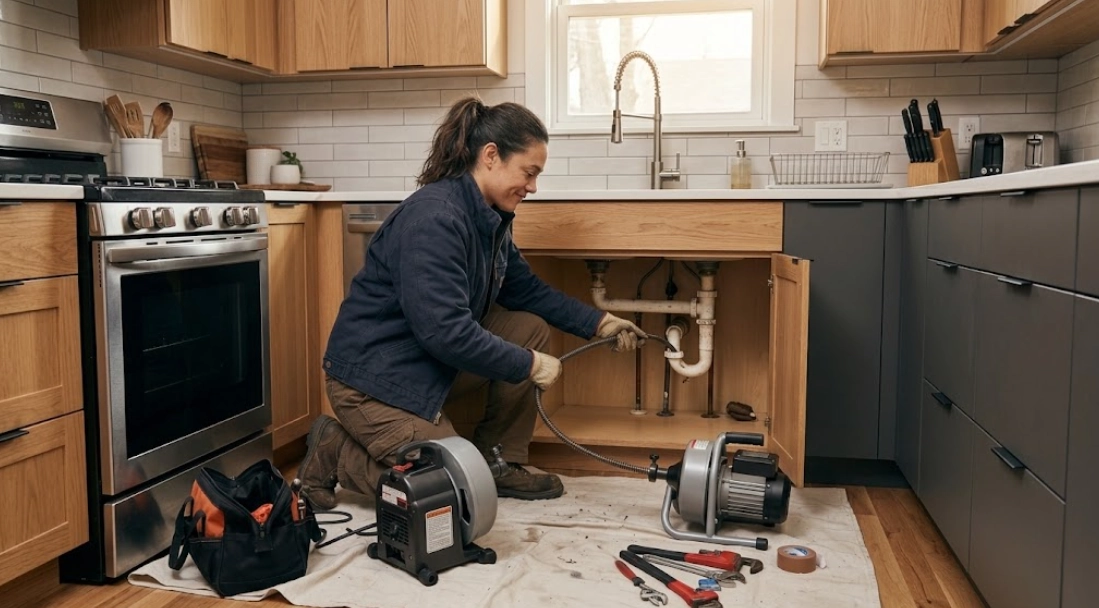
A slow-draining kitchen sink or a backed-up shower quickly disrupts daily life. In the historic brick row houses and multi-story walkup buildings throughout Ditmars-Steinway, plumbing drainage systems face decades of accumulated residue. Providing effective drain cleaning Ditmars-Steinway Queens requires equipment specifically tailored to navigate vintage cast-iron soil stacks, galvanized branch pipes, and brass P-traps without cracking fragile metal walls.
Common Residential Drain Challenges
Different fixtures inside Queens homes suffer from distinct clogging mechanisms:
- Kitchen Sink Grease and Food Waste: Warm cooking fats, oils, and grease (FOG) liquefy when washed down the drain, but congeal into a waxy, cement-like coating as they hit cold cast-iron pipes in the cellar. Combined with coffee grounds and food particles, grease constricts pipe diameter until water backs up completely.
- Bathroom Hair and Soap Scum: Shower and tub waste lines accumulate long hair strands bound tightly by soap curd and body washes, creating dense fibrous blockages inside chrome or brass drum traps.
- Scale and Tuberculation in Aging Cast Iron: Over fifty to eighty years of service, cast-iron drain walls oxidize, developing jagged flakes of rust (tuberculation) that snag toilet paper, flushable wipes, and waste.
- Main House Trap Obstructions: NYC building code historically required double-vented house traps in the basement front foundation. These deep cast-iron U-bends can trap sediment, debris, or tree roots. When the house trap clogs, our sewer line repair specialists step in with heavy-duty equipment.
Mechanical Snaking vs. Hydro Jetting
Depending on pipe age, material condition, and the nature of the blockage, technicians employ distinct clearing methods:
1. Motorized Electric Cable Snaking
The standard first line of defense for interior branch lines. A flexible, heavy-duty steel cable rotates through the pipe, boring through solid obstructions, cutting through hair tangles, and retrieving foreign objects to restore immediate gravity drainage.
2. High-Pressure Hydro Jetting
For pipes choked with thick grease or hard mineral scale, snaking only punches a narrow hole that quickly reclogs. Hydro jetting uses water pressurized up to 4,000 PSI expelled through specialized forward- and rear-facing nozzles. The rotating water jets scour the entire interior pipe wall back to bare metal, washing sludge safely into the municipal main. Technicians always evaluate pipe wall thickness before jetting older cast-iron lines to prevent blowouts.
Dealing With a Stubborn or Gurgling Drain?
Our drainage technicians clear bathroom sinks, tubs, kitchen lines, and main building drains across Ditmars-Steinway.
Why You Should Avoid Chemical Drain Cleaners
When faced with standing water, many property owners pour commercial caustic drain chemicals down the sink. In older Queens buildings, this is hazardous. Chemical cleaners generate intense heat through exothermic reactions that soften PVC fittings, degrade brass slip nuts, and eat pinholes through corroded cast iron. Furthermore, standing caustic chemicals create severe chemical burn hazards for plumbers who must subsequently disassemble the trap. If you suspect an active leak from chemical pipe damage, consult our leak detection team.
Preventive Drain Habits for Multi-Family Living
Maintaining clear drainage in multi-family buildings requires proactive habits:
- Never pour cooking oils, grease, or butter down the kitchen drain; collect grease in metal cans and dispose of it in household trash.
- Install fine mesh strainers over shower and tub drains to catch hair before it enters the plumbing trap.
- Do not flush "flushable" wipes, paper towels, facial tissues, or feminine hygiene products down toilets.
- Flush kitchen drains monthly with boiling water and dish detergent to melt early grease coatings.
Frequently Asked Questions About Drain Cleaning
Gurgling or bubbling fixtures indicate a venting deficiency or a developing downstream clog. As draining water struggles to push past a partial obstruction, it compresses or displaces air in the pipe, forcing air bubbles up through the nearest plumbing water seal (the toilet bowl trap).
Lightweight sink augers typically reach 25 to 50 feet through fixture branch arms. For main building drains, heavy-duty sectional or drum machines carry 100 feet or more of reinforced steel cable capable of traveling from the basement cleanout all the way to the municipal sewer in the street.
Vintage brass or cast-iron cleanout plugs often seize solid from decades of rust. Attempting to force them with an oversized pipe wrench can shatter the cast-iron trap hub. Technicians apply penetrating lubricants or carefully notch and replace seized plugs with expandable rubber test plugs or modern mechanical cleanouts.
Speak Directly With a Queens Drain Technician
Restore rapid, free-flowing drainage to your sinks, tubs, and main lines. Call NY Plumbing in Ditmars-Steinway today.